


INDUSTRIES

Retail
Launch campaigns, assign and monitor tasks at each point of sale, in real time.

Restaurants
Communicate with, train, and supervise your front-of-house and kitchen staff.

Hotels & Tourism
All departments are on the same page, from the front desk to housekeeping.

Fashion & Luxury
Promote the brand and run campaigns in each store.

Pharmacy & Health
Protocols, regulatory training, and communication at each facility.

Manufacturing
Instructions, tasks, and on-the-job training, without a computer.


 Subscribe to our newsletter
 Stay up to date with all our latest news
Subscribe to our newsletter Stay up to date with all our latest news

May 5, 2026
Area Manager: Role, Responsibilities and Key Challenges

CONTENT CREATED BY:

Table of contents
The area manager is one of the most decisive figures in any company operating multiple locations. They are the link that connects headquarters strategy with the reality on the ground, and the person responsible for ensuring every store, centre or branch executes in a consistent, aligned and efficient way. Yet their work is riddled with friction: fragmented communication, dispersed teams, high turnover and limited visibility into what is actually happening at each location.
In this article we analyse exactly what an area manager is, what their real responsibilities are, the day-to-day challenges they face, and how the most advanced companies are transforming this role to drive genuine business impact.
What is an area manager and what is their real role in the organisation
The area manager — also known as district manager or regional manager — is the professional who manages a group of sales locations within a geographic or commercial territory. Depending on the size of the company, they may oversee between 5 and 30 stores or centres, ensuring that all of them operate to the same quality, service and results standards.
Their position in the organisational chart places the area manager between the commercial or operations director and the store managers at each location. They do not execute directly in-store, but they are responsible for ensuring that those who do have the tools, information and judgement to do it well.
In retail, hospitality, logistics or pharma, the area manager is a critical piece: when it works well, execution is consistent across the entire network; when it fails, each store ends up being an island that interprets strategy in its own way.

Main responsibilities of the area manager
The area manager’s responsibilities go far beyond simply “visiting stores”. Below are the functions that truly define their day-to-day work:
- Operational supervision of the network. Ensuring all locations comply with company standards: visual merchandising, customer service procedures, campaigns and regulations.
- KPI tracking and decision-making. Analysing sales, productivity, turnover and satisfaction indicators for each store. Detecting deviations and activating concrete action plans.
- Communication between headquarters and store. Conveying management directives to store managers clearly and ensuring they reach all shifts. And in the opposite direction, bringing the reality of the field back to headquarters.
- Team development. Supporting store managers in their professional development, identifying talent across the network and ensuring teams have the training they need to execute well.
- Onboarding and turnover management. In sectors with high turnover, the area manager must ensure new employees are onboarded quickly and consistently across all locations.
- Execution validation. Verifying that campaigns, procedure changes and instructions from headquarters are actually implemented, not just on paper.
| Area manager function | Direct business impact |
|---|---|
| Operational network supervision | Consistent execution → less variability in results |
| KPI tracking | Early detection of deviations → faster correction |
| Headquarters-store communication | Messages that reach everyone → fewer errors from misunderstandings |
| Team development | Lower turnover → lower talent replacement cost |
| Campaign validation | Higher compliance → real return on marketing investment |
The real day-to-day challenges of the area manager
Knowing the area manager’s responsibilities is one thing. Understanding why so many professionals in this role feel they cannot keep on top of everything is another. The most frequent challenges relate to the structure of the work, not to any lack of capability:
- Fragmented communication. Most companies with store networks still use WhatsApp, phone calls or email to communicate instructions. The result: messages that do not reach all shifts, duplicated information and no traceability. According to McKinsey data, deskless workers spend up to 20% of their working day searching for information or waiting for instructions that do not arrive on time.
- Inconsistent execution. Even when headquarters sends the same directives to all stores, local interpretation varies. Without real validation mechanisms, the area manager does not know whether a campaign was executed correctly until it is too late. Retail sector studies estimate that real operational compliance in stores sits at around 40%, well below internal standards.
- High turnover and continuous onboarding. In retail, average employee turnover exceeds 60% annually in many markets (according to Gallup data for the sector). Each new hire demands time from the store manager and the area manager themselves to ensure the new person understands procedures before serving customers.
- Data that arrives too late. Sales and operational reports typically have a lag of hours or days. The area manager makes decisions based on a snapshot of the past, not on what is happening right now in each location.
- Insufficient in-person visits. With 15 or 20 stores to manage, the area manager cannot visit each location as frequently as necessary. Visits are concentrated on the worst-performing stores, and the rest operate without direct supervision for weeks at a time.

How the area manager can align dispersed teams today
The most significant change in store network management in recent years has not been strategic — it has been about tools. Area managers who achieve the best results do not do so because they visit more stores or work longer hours: they do it because they have real visibility into their territory and can act before problems escalate.
These are the levers that make the difference:
- Communication with traceability. Replacing dispersed channels (WhatsApp, email, calls) with a single channel that includes read confirmation. The area manager knows who has received and read each instruction, and can follow up without having to call every store individually.
- Checklists with evidence. Instead of relying on store managers’ word, critical tasks — campaign setup, price checks, opening protocol — are completed with photo validation. The area manager can verify execution in real time from any device.
- Training integrated into the workflow. With high turnover, onboarding cannot depend on sporadic in-person training sessions. Mobile-accessible micro-content allows new employees to get up to speed independently, at their own pace, without overloading the store manager or the area manager.
- Real-time data. A per-store dashboard allows the area manager to detect in seconds which location is below target, which tasks have not been completed or which communications have not been read. This turns in-person visits into productive conversations rather than improvised diagnostic sessions.
Clarel is a good example of how a dispersed store network can improve execution and team alignment with an integrated platform. With isEazy Engage, they were able to train professionals across multiple stores simultaneously, reducing the time needed to onboard new employees and increasing operational consistency across the entire network.
Discover more success stories →
Key skills of an effective area manager
The area manager profile has evolved. Being a good salesperson or having extensive in-store experience is no longer enough. The role demands combining leadership skills with analytical capabilities and a clear operational vision.
| Skill | Why it matters |
|---|---|
| Leadership and team development | Results are generated by people; the AM supports them |
| Clear and direct communication | Ambiguous instructions = inconsistent execution |
| KPI analysis | Without data, decisions are intuitions in disguise |
| Change management | Processes and campaigns change; teams must adapt quickly |
| Planning and organisation | With 15–20 stores, prioritisation is a critical skill |
| Digital tools proficiency | Effective remote management requires technology, not just physical presence |
In practice, the most effective area managers are those who understand that their job is not to control stores, but to develop store managers who are capable of solving problems without constantly depending on them. The more autonomous each store is, the more the area manager can focus on improving the network as a whole.
The area manager as the engine of network execution
The area manager’s scope of responsibility is broad, demanding and — for a long time — undervalued in terms of tools and support. In a sector where execution at the point of sale is the difference between growth and losing market share, this role needs more than experience and determination: it needs real visibility, communication that works and data that arrives on time.
Companies that invest in equipping their area managers with the right tools do not just improve network performance: they reduce turnover, accelerate onboarding and shift from managing by intuition to managing by data. And in a competitive retail environment, that makes all the difference.

How to transform the Area Manager role with technology and improve retail execution
In the world of retail, the Area Manager’s role is crucial for ensuring operational consistency and success across multiple locations. However, communication challenges, high turnover and inconsistent execution are commonplace. To overcome them, companies need to equip their Area Managers with the right tools that give them real-time visibility, effective communication and the ability to make data-driven decisions.
isEazy Engage offers a comprehensive solution, enabling Area Managers to align their teams, improve campaign execution and optimise the onboarding process — all from an easy-to-use digital platform. With tools like these, Area Managers can transform their daily work and generate real impact on the business.
Frequently asked questions about the area manager
What is the difference between an area manager and a store manager?
A store manager oversees a single location: their team, day-to-day operations, and local results. An area manager, by contrast, supervises multiple locations simultaneously within a geographic territory. Their responsibility is not to execute in-store, but to ensure each store executes consistently, aligned with headquarters objectives. The area manager is the link between leadership and store teams: they translate corporate strategy into concrete actions, and bring the operational reality of the field back to headquarters.
What are the main challenges of an area manager in retail?
The most common challenge is maintaining operational consistency across all locations: ensuring communication reaches every shift, processes are executed the same way in every store, and performance data is visible in real time. Added to this is the high employee turnover typical of retail environments, which forces the area manager to spend significant time on onboarding and continuous training. Geographic dispersion also makes in-person visits difficult, meaning many decisions are made with incomplete or outdated information.
What skills does an area manager need to be effective?
The most valued skills fall into two categories. On one hand, leadership competencies: the ability to develop teams, communicate clearly, motivate people in high-pressure environments, and manage change. On the other, analytical and operational competencies: interpreting sales and operational KPIs, planning store visits, managing priorities across multiple locations, and making data-driven decisions. In practice, the most effective area managers are those who can combine both: they understand the numbers and know how to translate them into concrete conversations with their teams.
How can technology help the area manager better manage their territory?
Technology allows the area manager to act on real data rather than assumptions. With an integrated communication and operations platform, they can send instructions to all locations with read confirmation, launch checklists with photo evidence to validate campaign execution, and check each store’s performance in real time without waiting for weekly reports. This reduces the time spent on control and oversight tasks, freeing them to focus on what genuinely drives impact: developing their teams and improving execution across the network.
Featured articles
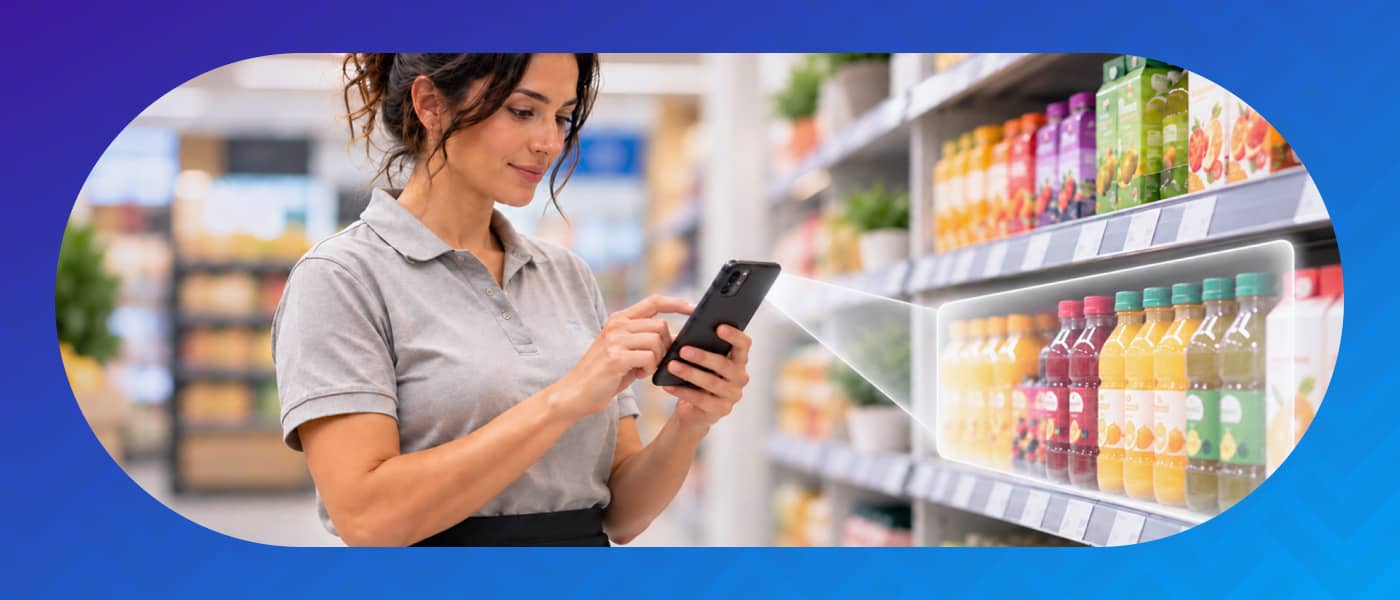



Does the information you send from headquarters actually reach all the shifts?
Ensure your network is aligned through a single, traceable channel.
Request a demoContact us

Your stores, all in a row. Your team, unstoppable
Operations, communication, and training all in one AI-powered app. For teams without desktops


Your stores, all in a row. Your team, unstoppable
Operations, communication, and training all in one AI-powered app. For teams without desktops
Related articles


