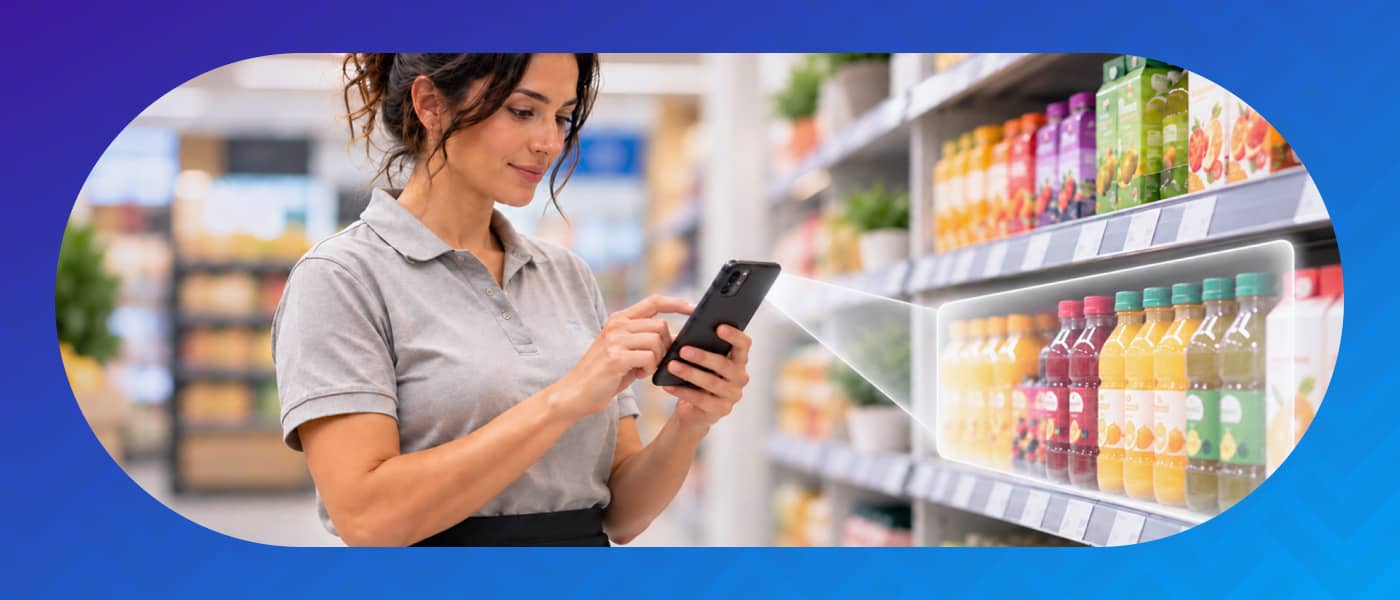
Digitize your point-of-sale management and put an end to hidden errors
INDUSTRIES

Retail
Launch campaigns, assign and monitor tasks at each point of sale, in real time.

Restaurants
Communicate with, train, and supervise your front-of-house and kitchen staff.

Hotels & Tourism
All departments are on the same page, from the front desk to housekeeping.

Fashion & Luxury
Promote the brand and run campaigns in each store.

Pharmacy & Health
Protocols, regulatory training, and communication at each facility.

Manufacturing
Instructions, tasks, and on-the-job training, without a computer.
 Subscribe to our newsletter
 Stay up to date with all our latest news
Subscribe to our newsletter Stay up to date with all our latest news

July 17, 2026

CONTENT CREATED BY:

Table of contents
You have 20 stores. HQ sends instructions for a campaign launch. Three weeks later, each point of sale has executed it differently: varying prices, incorrectly placed displays, staff who had no idea the protocol existed. The problem wasn’t the campaign. It was the lack of a clear SOP and, above all, the lack of a system to ensure it was actually followed.
Standard Operating Procedures (SOPs) are the mechanism that allows retail chains to operate consistently across all their points of sale. But writing them is only 20% of the work. The remaining 80% — distributing them, training staff on them, tracking them and auditing them — is where most organisations fail.
Unlike industrial or pharmaceutical SOPs — focused on highly regulated manufacturing processes — retail SOPs are more dynamic in nature: they change with every campaign, every season, and every product update. Their goal is not just regulatory compliance, but ensuring the customer experience is identical across every store.
The most common SOPs at a point of sale are:
Each of these procedures, when properly documented and distributed, reduces variability between stores and protects brand image at the customer level.
According to retail sector operational data, only 40% of the procedures set by HQ are consistently executed at the point of sale. The problem is rarely a poorly written SOP. The problem is structural:
The result is what isEazy Engage’s operational framework calls “ghost compliance”: procedures exist on paper, but real in-store execution drifts away from the standard. Approximately 20% of team time is lost searching for information that should be available in seconds.
Not all processes have the same impact, nor the same risk if executed incorrectly. Before documenting every procedure in your point of sale, apply this prioritisation framework:
| Process | Why standardise it | Risk if left unstandardised |
|---|---|---|
| Campaign activation | Direct impact on sales and customer experience | Inconsistent execution across stores, revenue loss |
| Visual merchandising | Affects brand perception and conversion rate | Inconsistent brand image across locations |
| New employee onboarding | High turnover demands fast, uniform training | Long ramp-up time, errors on the job |
| Store opening and closing | Security and core business operations | Security incidents and till errors |
| Customer service | Key driver of the shopping experience | Variability in perceived service quality |
Implementing SOPs is not just about writing instructions. It is a process that combines documentation, training, distribution and ongoing auditing.
Before documenting, observe how processes are currently being carried out in store. What does each employee do differently? Where do the most errors or questions occur? Those points of variation are exactly the ones that need an SOP.
The SOP will be read by a store employee, not a senior manager. Use plain language, numbered instructions, and support it with images or short videos where the process is visual. A good visual merchandising SOP shows what the shelf should look like — it doesn’t just describe it.
The employees who carry out the process every day will spot missing steps or steps that are incorrectly sequenced. Involving them in validation increases adoption and reduces future revisions.
This is the step most organisations overlook. If the employee doesn’t use company email or have access to the intranet during their shift, the PDF SOP will never reach them. Distribution must happen via a mobile channel, with read notifications and delivery confirmations. This is where tools like isEazy Engage’s employee communication make the difference: the SOP reaches the employee’s device, read confirmation is tracked, and who has received it is recorded.
An SOP that is never reviewed goes stale. Set a review schedule (at least twice a year) and assign a responsible owner. Every change to a campaign, regulation or process must be updated in the SOP and immediately redistributed to all affected points of sale.
There is a critical gap between “having the SOP documented” and “the SOP being executed in store”. That gap is distribution, tracking and auditing.
Organisations that close that gap don’t do it with more documentation. They do it with tools that turn the SOP into measurable action: digital checklists that the employee completes during execution, push notifications alerting staff to updates, and dashboards that allow HQ to see in real time which stores are executing correctly and which are not.
isEazy Engage’s task management works on exactly this principle: SOPs are translated into digital tasks and checklists assigned to each point of sale, with attached evidence (photos, validations) and real-time tracking from HQ. The result is moving from estimated compliance to demonstrated compliance.
SOPs and training are inseparable. A new employee who has not gone through a structured onboarding will not execute SOPs correctly even if they have them in front of them. And an SOP without associated training becomes a document nobody reads.
The most effective practice combines both in a single flow:
isEazy Engage’s frontline training integrates this flow natively: SOPs can be distributed as training content and as an operational task in the same application, without switching tools.

The difference between a manually managed SOP and one supported by a digital tool is not just one of efficiency. It is the difference between knowing whether it was executed and having to assume it was.
| Dimension | Without a digital tool | With isEazy Engage |
|---|---|---|
| SOP distribution | Email, PDF, shared folder | Push notification to employee mobile device |
| Read tracking | No traceability | Read confirmation logged by employee and store |
| Procedure execution | No verification | Digital checklist with evidence (photos, validations) |
| SOP updates | New version by email; risk of confusion | Automatic update; immediate notification to all stores |
| HQ visibility | On-site visits or phone calls | Real-time dashboard by store and process |
Imagine a fashion chain with 30 stores launching a new seasonal campaign with changes to visual merchandising, pricing and communications materials. HQ sends a 4-page PDF SOP by email to each store manager.
Typical result without a tool: Two weeks into the campaign, a visit to 10 random stores shows that only 4 have correctly executed all elements of the SOP. In 3 stores, the manager had rotated and the new employee never received the instruction. In 2 others, the email arrived but sat unread in their inbox.
Result with isEazy Engage: The SOP is distributed as an operational task with a checklist. Each store manager receives a push notification, confirms receipt and attaches a photo of the final display as evidence. HQ can see in real time which stores have completed the task and can act before the campaign launches on those with pending issues.
The difference is not one of willingness or professionalism on the part of the teams. It is one of operational infrastructure.
SOPs are the foundation of operational consistency in any retail chain or point-of-sale network. Without them, each store operates on its own judgement, and the customer experience varies depending on who is working that shift.
But the biggest trap is not lacking SOPs. It is having them and seeing them go unfollowed. 60% of organisations have documented procedures their store teams do not follow — not because they don’t want to, but because the mechanism for distribution, tracking and training is inadequate.
The solution is not writing better PDFs. It is integrating SOPs into the daily workflow of every employee: as tasks, as checklists, as training delivered at the right moment. isEazy Engage is built precisely for this: turning HQ’s operational standards into consistent, measurable execution across every point of sale.
An SOP (Standard Operating Procedure) is a comprehensive document that describes how to carry out a process from start to finish: who does it, with which tools, in what order, and against what quality criteria. A checklist, on the other hand, is a tool derived from the SOP: it summarises the key steps as a verification list for employees to check through during execution. In practice, SOPs and checklists are complementary. The SOP defines the standard; the checklist ensures it is followed every shift. In retail environments with high staff turnover, digital checklists integrated into tools like isEazy Engage are the most effective way to ensure SOPs are executed consistently across every point of sale.
There is no universal frequency, but point-of-sale SOPs should be reviewed at least once a year, or whenever any of the following occur: a change in operational processes, recurring errors identified in audits, or the introduction of new technology. The most common mistake is writing the SOP and never updating it. An outdated SOP is just as harmful as having none at all: employees stop trusting it and revert to ad hoc ways of working. Digital tools that allow updates to be distributed in real time to all points of sale, such as isEazy Engage, make this continuous review cycle significantly easier to manage.
Having the document is not enough: the SOP must reach the employee at the moment they need it, in a format they can check in seconds. Some effective practices: distributing SOPs through the same channel employees use to communicate daily, including read confirmations to create traceability, converting key steps into digital checklists employees complete during execution, and conducting regular audits to detect deviations. The most effective strategy for ensuring real compliance across all points of sale is combining initial onboarding training with day-to-day reminders and checklists.
The priority depends on the impact on the customer experience and the risk of error. The most critical SOPs in retail tend to be: store opening and closing, goods receiving and stock management, visual merchandising and product placement, customer service and returns handling, and campaign and promotion activation. In chains with multiple locations, campaign SOPs are especially critical: if each store interprets the instruction differently, the impact on sales and brand image can be significant. A good starting point is mapping the processes where the most incidents or the greatest variability between stores occurs.

Ensure your network is aligned through a single, traceable channel.
Request a demoContact us

Your stores, all in a row. Your team, unstoppable
Operations, communication, and training all in one AI-powered app. For teams without desktops


Your stores, all in a row. Your team, unstoppable
Operations, communication, and training all in one AI-powered app. For teams without desktops