Your network of stores working as a single team
INDUSTRIES

Retail
Launch campaigns, assign and track tasks at every store in real time.

Restaurants
Communicate with, train, and supervise your front-of-house and kitchen teams.

Hotels & Tourism
Keep all departments aligned, from reception to housekeeping.

Fashion & Luxury
Communicate your brand identity and execute campaigns across every store.

Pharmaceuticals & Healthcare
Manage protocols, compliance training, and communication at every location.

Manufacturing
Deliver instructions, tasks, and training directly on the factory floor, without a computer.
November 16, 2026

CONTENT CREATED BY:
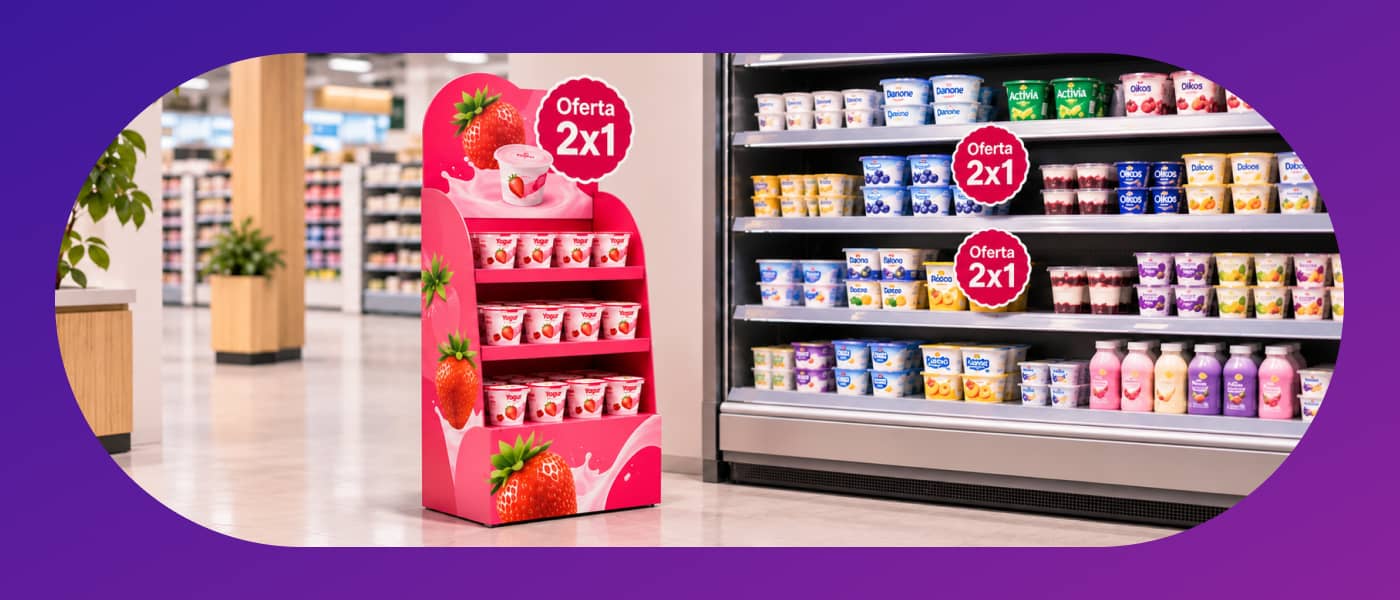
Table of contents
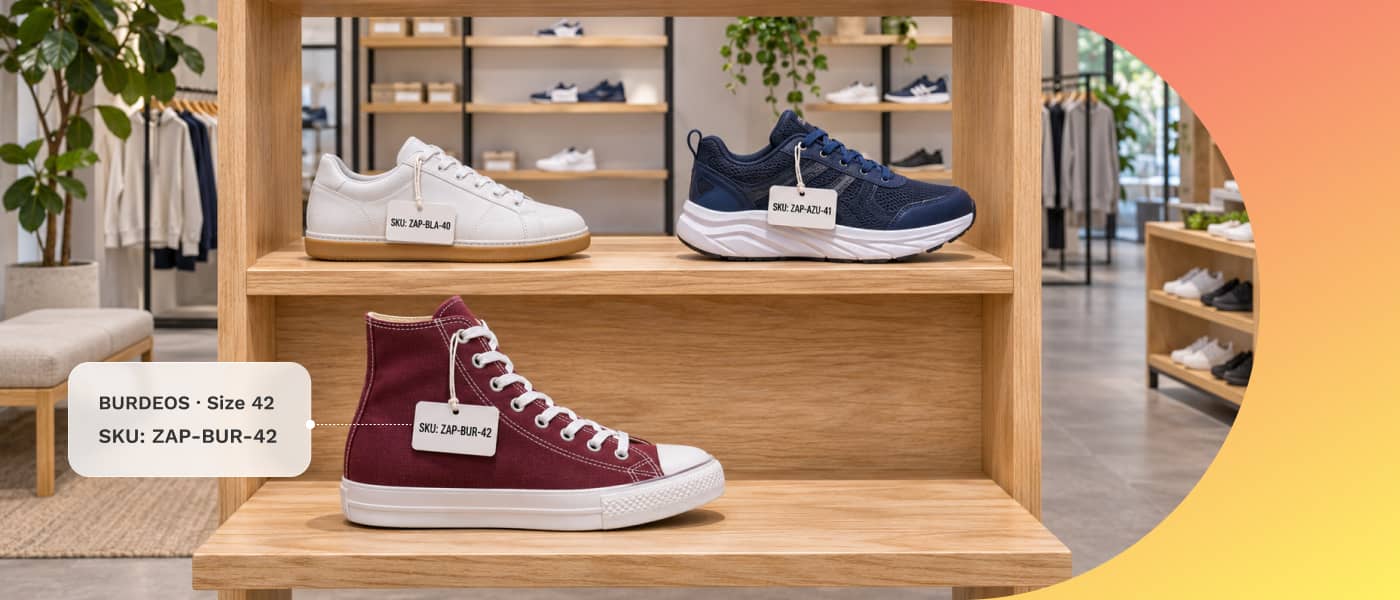
POP material —from point of purchase— is the set of physical pieces a brand produces and ships to stores to highlight a product or a promotion inside the shop: displays, floor stands, signage, shelf stoppers, shelf strips, vinyls, counter trays or branded furniture.
What sets the term apart from others in the industry is the emphasis. Talking about POP material means talking about the object: what gets designed, die-cut, printed, packed, shipped, stored, set up, restocked and, when the campaign ends, taken down. It is one more product in the brand’s catalog, with its unit cost, its logistics and its waste — except that it is not sold: it is spent.
That perspective matters because it explains where the money is lost. POP material is approved at a marketing head office and lives or dies in the hands of a store team that took no part in the decision, that receives the box somewhere between two product deliveries and that has almost never seen the finished setup.
These are different angles on the same reality, and it is worth not mixing them inside a single working document.
On a single international campaign it is perfectly normal for the brief to say POP advertising, the production order to say POP material and the delivery note to say “displays”. It is the same box.
The material determines almost everything else: what the piece costs, how much it weighs in transit, how many campaigns it survives and what happens to it at the end. This is the comparison worth having in front of you before approving a design:
| Material | Typical service life | When it pays off |
|---|---|---|
| Corrugated and solid board | One campaign. Semi-permanent if reinforced, with a couple of months of real use. | Short promotions, fast-changing messages and shipping to many stores: it is light, cheap and goes into the store’s own cardboard recycling stream. |
| Foamed PVC and polystyrene | Several campaigns if it takes no knocks. | Signage and panels that have to withstand humidity or cleaning, such as fresh produce, perfumery or entrance areas. |
| Acrylic (PMMA) | Semi-permanent: from several months to a couple of years. | Counter displays for expensive products, where the piece has to look good for a long time and the unit cost is spread across campaigns. |
| Metal and wood | Permanent: years, with maintenance. | Branded furniture with a fixed location negotiated with the retailer. The message changes, the structure does not. |
| Digital: screens and electronic shelf labels | Permanent, with installation and software costs. | Categories where promotions change so often that reprinting every week costs more than the screen. |
This is the part no brief describes and where the outcome is actually decided. In a retail chain with dozens or hundreds of stores, a piece of POP material goes through six stages and each one has a different owner. Fitting them together is not a marketing matter: it is a retail operations problem.
| Stage | Who carries it out | Where value is lost |
|---|---|---|
| 1. Design and approval | Brand marketing, with the agency. | It is designed without knowing the real store: dimensions that do not fit the gondola end, or setups that need two people. |
| 2. Production | Printer or display manufacturer. | Volumes are based on total stores instead of stores that will actually set it up, so there is surplus material from day one. |
| 3. Distribution | Logistics provider or the retailer’s own network. | It arrives mixed in with the product delivery, with no warning, and nobody connects the box with the campaign that is starting. |
| 4. Storage in store | Store team. | The stockroom is small: the box is stacked at the back and resurfaces once the promotion is already over. |
| 5. Setup and restocking | Store team or external installer. | It goes up late, incomplete, in a different location, or it runs out of product after three days and nobody restocks it. |
| 6. Removal and end of life | Store team. | It is not taken down on time and keeps advertising an expired promotion, or it is thrown away whole into a single bin. |
Industry intuition says POP material is a creative problem. The industry’s own data says otherwise.
According to the POPAI UK & Ireland compliance report, around 20% of the POP material budget goes into campaign implementation, twice what brands spend on design. And despite that weight, the same report notes that only 21% of retailers monitor compliance independently: the remaining 79% assume the displays are up. As much as 30% of POP activity is never, or almost never, measured.
The gap between what is believed and what happens is wide. The report points out that compliance figures of 90% or higher are commonly quoted on projects, while research puts reality well below that: in some mature markets, the share of campaigns reaching full compliance can be as low as 29%.
Those figures should be read with their date in mind: they come from a 2013 industry study reported in 2015, and the order of magnitude matters more than the decimal. But the conclusion still stands, and anyone who has made an unannounced store visit will recognize it.
The same report lists the five main reasons for non-compliance, and none of them has to do with the store team’s willingness:
The pattern is worth noting: four of the five are decisions taken at head office, not in the store. POP material does not fail through frontline apathy, it fails because nobody explained how that particular piece goes together.
Your network of stores working as a single team
Unified operations, instant communication, and real-time performance data


Campaigns are planned with a start date and almost never with a takedown date. That carries two costs.
The first is commercial: a display still advertising an expired promotion occupies a location that should already be generating something else, and it erodes the credibility of the next sign. In a hot spot, the opportunity cost is high; in a cold zone, it is simply in the way.
The second is environmental, and it is starting to carry regulatory and brand consequences. Here the material chosen at stage 1 determines the ending: cardboard has a clear route, since according to Cepi 75.1% of the paper and board consumed in Europe was recycled in 2024, with an industry target of 76% by 2030, and the store already has the stream set up for its own packaging. Mixed pieces —board with acrylic glued on, vinyl over PVC, structures with electronics— have no such route and end up in general waste.
The practical decision is simple and it is taken before production: if the piece is going to last one campaign, make it single-material and separable without tools. If it is going to last a year, then acrylic or metal does pay off.
Controlling is not auditing at the end: a closing retail audit serves the report, not the correction. Controlling means having one data point at every stage, and in practice it looks more like a store checklist than an inspection. This is the minimum traceability that lets you answer, at the end of a campaign, whether the idea failed or the setup did:
| Stage | What to record | With what evidence |
|---|---|---|
| Production and shipping | How many pieces per store and to which stores, against the total produced. | A delivery note per store, not a single campaign-wide figure. |
| Delivery to store | That the box has arrived and is identified as campaign material. | Confirmation from the store team on the delivery day, with the campaign code. |
| Setup | That it is up, in the planned location and complete. | A dated photo showing the surrounding area, not just the material, plus an item-by-item checklist. |
| Maintenance | That it still has product on it halfway through the campaign. | A scheduled mid-campaign check, not only the one at launch. |
| Removal | That it was taken down on the agreed date and how the waste was separated. | A takedown task with its own date and its own photographic evidence. |
The challenge of a POP material campaign does not end when head office approves the design. Achieving consistent implementation means coordinating the instructions, the tasks and the follow-up of the teams working in each store.
With isEazy Engage, task management lets you distribute setup instructions, assign actions to the right teams and check their execution status. That makes it easier to identify which stores have completed the planned tasks and which ones need following up.
Employee communication makes sure every team receives the campaign information it needs, including supporting materials, updates and procedures. On top of that, frontline team training reinforces knowledge about setting up, restocking or removing promotional displays, helping to reduce errors caused by unclear instructions.
This way, isEazy Engage connects campaign planning with execution in stores. By centralizing information and task follow-up, managers gain greater visibility over store compliance and can spot deviations without relying solely on manual checks once the promotion is over.
The success of POP material does not depend on its design alone, but on how its implementation is carried out in each store. A campaign can be perfectly planned and still lose effectiveness if the materials arrive late, are placed incorrectly or are not removed when they should be. That is why ensuring correct planogram execution and correct handling of promotional materials is essential to keep a campaign consistent across the whole network.
The decisions that really make the difference are taken before launch: defining owners, setting clear setup instructions, fixing implementation and takedown deadlines and checking that every store carries out the planned actions. That way, when a campaign falls short of expectations, it is easier to identify where things went off track and take corrective measures. Cross-referencing this data with compliance and retail audit indicators also makes it possible to assess execution objectively.
With isEazy Engage, that execution stops depending on scattered communications and manual follow-ups. From a single app you can communicate campaigns to your store teams, assign implementation tasks and track their execution, receive photographic evidence and check the compliance status of every store. If you manage a store network and need greater visibility over how your POP material is implemented, request an isEazy Engage demo and find out how to improve the coordination and follow-up of your campaigns.
They describe the same reality from different angles. POP advertising names the discipline: which formats exist, where they are placed and why they work. POP material names the specific physical piece: the display sitting on a pallet, waiting to leave the stockroom. It is the term that appears on production orders, delivery notes and packing lists. On a single international campaign it is normal for the brief to say POP advertising, the production order to say POP material and the delivery note to say displays, and for all three to be the same box. In Spanish-speaking markets the same idea travels under PLV, and in Brazil under material de PDV. It is worth not mixing the terms inside one working document.
They are better classified by material and service life than by shape, because that is what determines cost, transport and the end of the piece. Corrugated or solid board lasts one campaign and is the option for short promotions shipped to many stores, because it is light, cheap and fits the recycling stream the store already has in place. Foamed PVC and polystyrene withstand humidity and cleaning, which is useful in fresh produce or perfumery. Acrylic is semi-permanent and pays off on counter displays for expensive products. Metal and wood are permanent, for branded furniture with a negotiated location. And digital screens pay off when the message changes so often that reprinting works out more expensive.
Because the chain between head office and the shelf fails, not the store. The POPAI UK and Ireland compliance report lists five main causes, and four of them are decided at head office: vague or ambiguous instructions, which is the first one; designs that were not made to be assembled with the staff available; fragile components that break in transit or on first assembly; planograms that are too complex to interpret; and no compliance check after installation. Logistics adds to that: the material arrives mixed in with the product delivery, with no warning, and the box is stacked at the back of a small stockroom until the promotion is already over.
According to the POPAI UK and Ireland compliance report, around 20% of the POP material budget goes into campaign implementation, twice what brands spend on design. It is a figure that contradicts industry intuition, which still treats POP material as a creative problem. The same report adds that only 21% of retailers monitor compliance independently and that the remaining 79% simply assume the displays are up. These figures should be read with their date in mind, since they come from a 2013 industry study reported in 2015, but the order of magnitude is still representative.
What can be done depends on a decision taken much earlier, at the design stage. A single-material piece that separates without tools has a route out: cardboard goes into the recycling stream the store already uses for its own packaging, and in Europe 75.1% of the paper and board consumed was recycled in 2024, with an industry target of 76% by 2030. Mixed pieces —board with acrylic glued on, vinyl over PVC, structures with electronics— have no such route and end up in general waste. The practical rule is that if the piece is going to last one campaign it should be single-material, and that the takedown date should be set from day one, alongside the start date.

Ensure your network is aligned through a single, traceable channel.
Request a demoContact us
Your stores, all in a row. Your team, unstoppable
Operations, communication, and training all in one AI-powered app. For teams without desktops